
“From Local Impact to Global Solidarity: The Future of Zakat and Philanthropy in Strengthening Socio-Economic Resilience”
Why the tenth edition turns from what zakat has achieved at home to what it could achieve together.
The development of zakat management and philanthropy over the past two decades has shown significant progress at the local level. Many countries, including Indonesia, have successfully built zakat collection and distribution systems that are more structured, transparent, and directly impactful for society. Various economic empowerment, education, and social service programs based on zakat have yielded tangible results in increasing the income of mustahik (zakat recipients) and strengthening social resilience at the community level.
However, this impact is still dominated by local and national approaches, while the challenges faced by humanity are becoming increasingly global. Transnational poverty, humanitarian crises, conflicts, disasters, and the impacts of climate change cannot be resolved in isolation by individual nations. In this context, zakat and philanthropy hold immense potential to serve as instruments of global solidarity capable of bridging gaps and collectively responding to humanitarian issues.
The theme “From Local Impact to Global Solidarity: The Future of Zakat and Philanthropy in Strengthening Socio-Economic Resilience” is chosen to emphasize the need to transform the role of zakat and philanthropy from locally impactful instruments into a collaborative force on a global scale. This transformation demands the integration of management innovation, robust governance, and the alignment of humanitarian values across countries. Without a framework for global solidarity, the impact of zakat and philanthropy will remain fragmented and suboptimal in addressing shared challenges.
This theme also reflects the urgent need to strengthen collaboration among zakat institutions, philanthropic organizations, governments, academics, and the private sector at the international level. Through structured cooperation, zakat and philanthropy can contribute to human development, inequality reduction, and the creation of a more sustainable shared prosperity. Ultimately, the future of zakat and philanthropy will not only be determined by local success, but by its capacity to build global solidarity rooted in the values of justice and humanity.
Formulated to address the need to strengthen the role of zakat and philanthropy within an increasingly complex and interconnected global context.
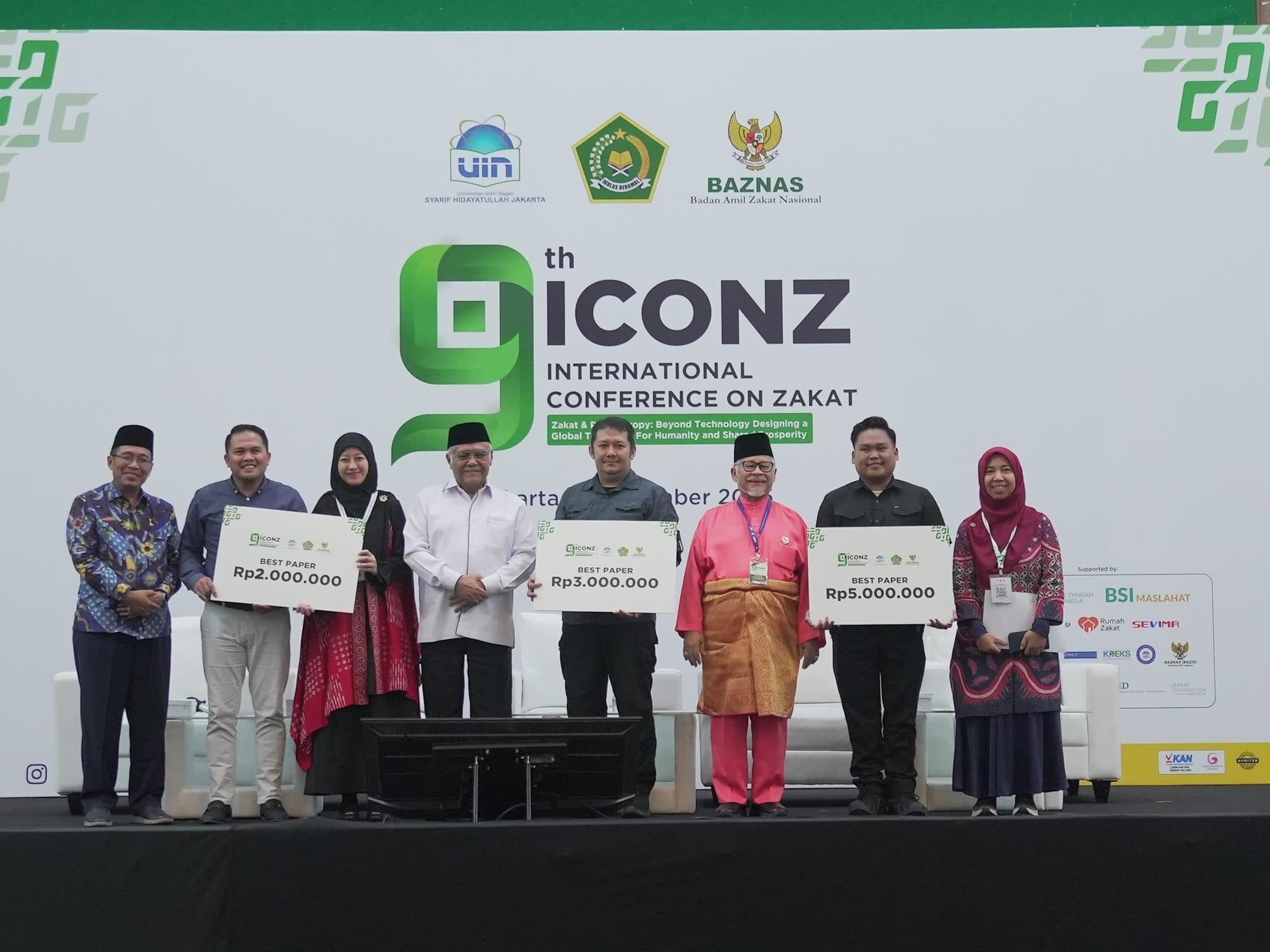
These speakers have been invited and are currently subject to confirmation.
Full paper submission deadline
Full paper acceptance notification
Technical meeting for paper presentation
Paper presentation
The 10th ICONZ
 IPB University
 Ministry of Religious Affairs
 The National Board of Zakat
 Ministry of National Development Planning of the Republic of Indonesia
 Central Bureau of Statistics
.png&w=384&q=75) National Sharia Economy and Finance Committee (KNEKS)
National Sharia Economy and Finance Committee (KNEKS) Indiana University, US
 Sakarya University, Turkiye
%252C%2520Hongkong.png&w=384&q=75) Commission on Asian Philanthropy (CAP), Hongkong
Commission on Asian Philanthropy (CAP), Hongkong Sultan Sharif Ali Islamic University, Brunei
%252C%2520Malaysia.png&w=384&q=75) Universiti Kebangsaan Malaysia (UKM), Malaysia
Universiti Kebangsaan Malaysia (UKM), Malaysia%252C%2520Malaysia.png&w=384&q=75) Albukhary International University (AIU), Malaysia
Albukhary International University (AIU), Malaysia.png&w=384&q=75) Masyarakat Ekonomi Syariah (MES)
Masyarakat Ekonomi Syariah (MES).png&w=384&q=75) Indonesian Association of Islamic Economists (IAEI)
Indonesian Association of Islamic Economists (IAEI)